

More
U.S. OPEN
3 Things to Know: 126th U.S. Open, Round 2

3 Things to Know: 126th U.S. Open, Round 2
A golf course near a coastline almost always introduces elements of unpredictability. Shinnecock Hills Golf Club, nestled between two saltwater bays and just a few miles from the Atlantic Ocean, is Exhibit A. In addition to the ever-present and shifting winds, a thick layer of fog rolled in shortly after the 6:35 a.m. EDT start of Thursday’s first round, resulting in a two-hour suspension of play.
Because of the delay, 50 players had to return to Shinnecock Hills early Friday morning to complete their first rounds. But now, the fog has lifted and the business of being one of the low 60 and ties to make the 36-hole cut is foremost on everyone’s mind.
What will it take to not just make the weekend, but contend? Resolve and patience, for sure, as the sustained winds and stronger gusts impact every shot – including putts – on this architectural masterpiece. It will also take imagination; while Shinnecock’s fairways are wider than they have ever been for a U.S. Open, the challenge intensifies as a player gets closer to the brilliantly designed green complexes.
Here are three things to know for Round 2:
The Winds of Change
Coming into the first round, the prevailing wisdom was that players with tee times in the morning wave on Thursday would have the edge, based on the wind forecast. The fog delay changed that calculus. While the wind didn’t blow quite as hard as expected, it was at its strongest from mid-morning to mid-afternoon. The 78 players in the morning wave felt the brunt of that force – only six players broke 70, led by Sam Stevens with 68. Slightly calmer conditions settled in by roughly 4 p.m. Thursday and the afternoon wave players, including 18-hole leader Wyndham Clark (6-under 64), took full advantage. The scoring average for the afternoon starters was 72.67, more than one stroke lower than the 73.87 recorded for the morning starters.
However, as USGA Chief Championships Officer John Bodenhamer emphasized on Golf Channel, Shinnecock Hills’ sandy soil means that the course dries as quickly as any in the game. Lower humidity, which will compound that characteristic, is forecasted for the remainder of the championship. While the late Thursday/early Friday starters might have had the edge thus far, it is very possible that the pendulum will swing back. Such are the vagaries of U.S. Open golf, particularly on a course like this one.
Brotherly Love
It’s been quite a year for the Fitzpatrick family. Matt Fitzpatrick, 31, the 2022 U.S. Open champion (and 2013 U.S. Amateur winner), has triumphed three times so far on the PGA Tour, including the Zurich Classic in New Orleans with younger brother Alex. That victory in the only team event on the Tour schedule secured playing privileges for the 27-year-old Alex, who was already on a high after claiming his first career victory on the DP World Tour just a month earlier. Alex has settled in nicely to PGA Tour life, making the cut in all six events he’s played in this year and recording three top-10 finishes.
Both brothers, born and raised in Sheffield, England, came to the U.S. for college – Matt for one semester at Northwestern, Alex at Wake Forest – and embrace the challenge posed by the U.S. Open. So who is the low Fitzpatrick so far? That honor belongs to Matt, who carded an impressive 3-under 67 in the first round, four strokes better than Alex, who was among the morning starters having to deal with the stronger winds. Friday will go a long way to determining who has brotherly bragging rights this week. At least their parents, Russell and Sue, can watch their sons perform at the same event rather than traveling between far-flung locations.
Amateurs Make Their Mark
A record-tying 20 amateurs made the field for this U.S. Open, the most since the championship was last held here at Shinnecock Hills in 2018. The big difference between amateurs of today and those in past decades is their preparation and readiness for golf’s biggest stages. Whether they compete for a high school or college team or are pursuing a different path, they have access to instruction, fitness, nutrition and mental game resources that simply did not exist in large scale as recently as 15-20 years ago. The U.S. National Development Program, now in its third year, is accelerating the effort to prepare America’s most promising young golfers to achieve success at the highest levels of the game.
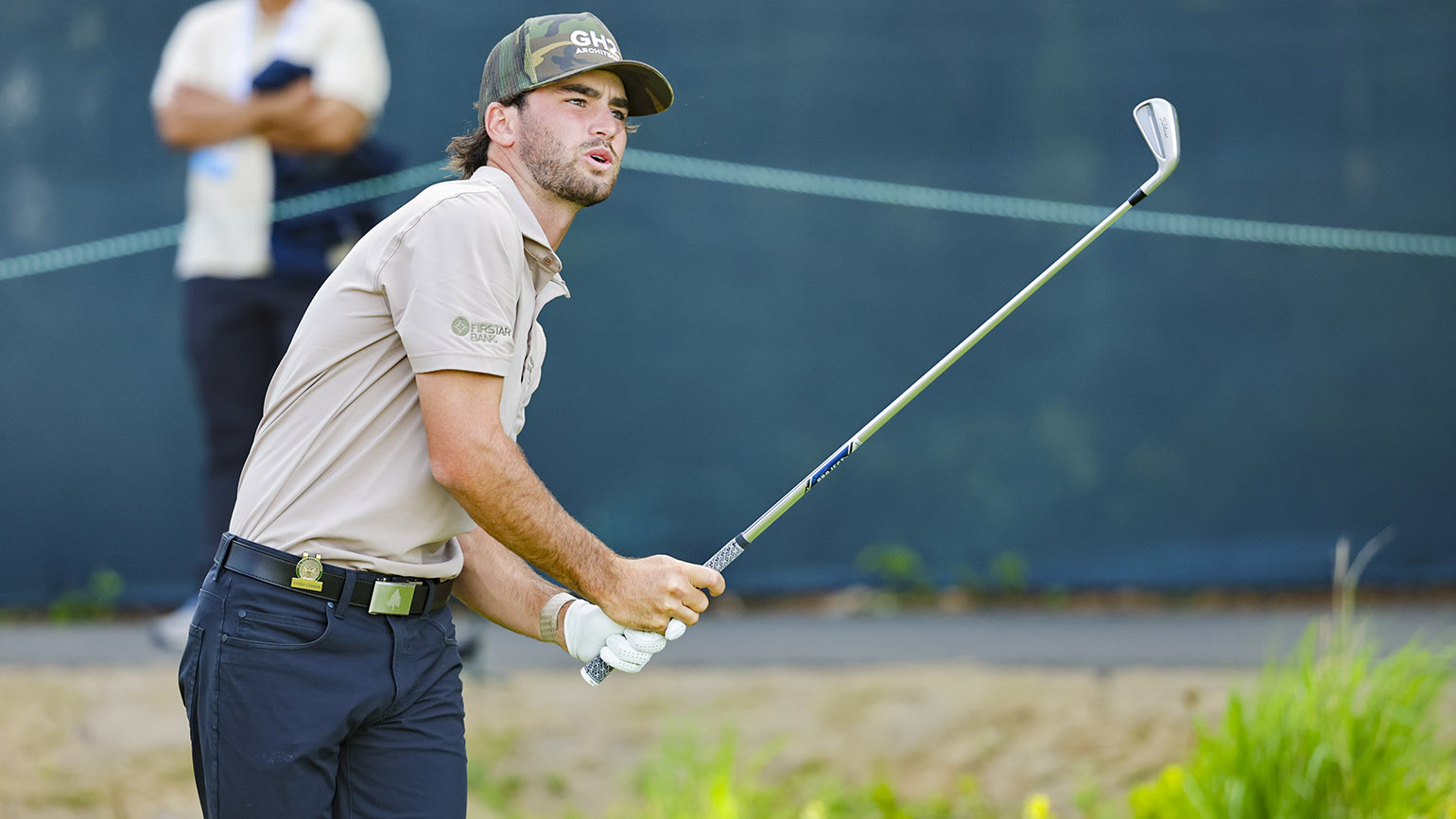
Depending on how many amateurs make the 36-hole cut, we could have quite a race for the silver medal awarded to the low amateur. Ryder Cowan, a rising senior at the University of Oklahoma, currently sets the pace after a first-round 68, but he has 17-year-old standout Miles Russell, reigning NCAA Division I champion Preston Stout and the world’s top-ranked amateur, Jackson Koivun, in close pursuit. This will be a compelling subplot to the weekend at Shinnecock Hills.
© 2026 United States Golf Association. All Rights Reserved.